
The ACRRM Independent Pathway

Your guide to the ACRRM Independent Pathway

Step 1: Check your eligibility

To be eligible for ACRRM IP you must:

- Be an Australian Citizen, Permanent Resident or Temporary Resident

- Hold Limited, Provisional, Specialist, or General AHPRA Registration.

You will be required to live and work in a rural area (MMM2–7), whilst also meeting your 19AB requirements.

Down Icon

Step 2: Application Process

Applications for ACRRM IP are open at various points during the year. Additionally, when applications are closed, you can register your interest for the program and be notified during the next application period. 

The application process includes:

Online Application

Complete your application by placing your personal details, mandatory supporting documents, referee details, and training region preferences.

Referee Reports

- Provide the name and contact details of 2 medical practitioner referees who must have supervised you for 4 weeks or more in the past 3 years. Referees are not allowed to be family relations or close friends.

- Once you have nominated your referees, they will be provided with a survey to fill out and return to ACRRM. No information provided by the referees will be available to the applicant.

Suitability Assessment

Submit 5 essay-style paragraphs about how your interests and experience relate to the ACRRM selection criteria as follows:

- Demonstrated commitment to a career as a specialist General Practitioner working in rural or remote Australia.

- Demonstrated capacity and motivation to acquire abilities, skills and knowledge in the ACRRM domains of practice.

- Demonstrated connection with rural communities.

- Demonstrated commitment to meeting the needs of rural and remote communities through an extended scope of practice.

- Possesses the personal characteristics associated with a successful career in Rural Generalism.

Multiple Mini Interviews (MMIs)

- MMIs are short interviews conducted by an ACRRM representative practicing in Australia who will assess your experience, knowledge and skills

- You only have 2 minutes to read a scenario and 8 minutes to answer, so be prepared by understanding the selection criteria and relating your experiences to each standard.

Down Icon

Step 3: Training Requirements

Once accepted into the program, you’ll complete four years of training, including three years of Core Generalist Training (CGT) and one year of Advanced Specialised Training (AST).

Core Generalist Training (CGT)

CGT enables you to have general skills and knowledge in primary, secondary and emergency care in a rural and remote context. This includes:

  • Paediatrics
  • Obstetrics
  • Anaesthetics
  • 6 months in primary care
  • 3 months in secondary care
  • 3 months in emergency care
  • 12 months in rural or remote practice (MMM 4-7)

Advanced Specialised Training (AST)

AST aims to refine your skills and knowledge specifically to 1 discipline and you will work in a specialised rural area that needs the chosen discipline. The 12 disciplines are:

  • Aboriginal and Torres Strait Islander health
  • Academic Practice
  • Adult Internal Medicine
  • Anaesthetics
  • Emergency Medicine
  • Mental Health
  • Obstetrics and Gynaecology
  • Paediatrics
  • Palliative Care
  • Population Health
  • Remote Medicine
  • Surgery
Down Icon

Step 4: Education & Assessment Requirements

Education Requirements

  • Primary Care Orientation
  • Cultural Awareness Training
  • ACRRM Online Modules (minimum of 4)
  • Virtual and face-to-face National Education Workshops
  • Emergency Skills Training (REST, Tier 1 or Tier 2 courses)

Assessment Requirements

Mini Clinical Evaluation Exercise (miniCEX) 

  • A workplace based assessment used to evaluate your direct contact with patients,

Multiple-Source Feedback (MSF) 

  • Feedback from patients and colleagues to assess your interpersonal and professional behaviour, development, and clinical skills.

Multiple Choice Questions (MCQ) 

  • An exam to test your applied knowledge, recall and reasoning across the curriculum content.

Case Based Discussion (CBD) 

  • An assessment of your clinical reasoning and application of knowledge using your clinical cases in your own clinical context.

Structured Assessment using Multiple Patient Scenarios (StAMPS) 

  • An assessment that focused on rural and remote practice.

Once you have successfully completed the program and the necessary requirements, you will be able to achieve Fellowship with ACRRM.

The ACRRM Independent Pathway

The Independent Pathway (IP) is a self-funded option that is accredited by the Australian Medical Council and leads to Fellowship of ACRRM (FACRRM).

Through the Independent Pathway (IP), all Fellowship training and education is self-funded. IP is suitable for those who are not eligible for Commonwealth funding due to;

  • having a temporary visa
  • not having general registration with APHRA, or
  • having a primary medical qualification from overseas

Designed for those who prefer more flexibility or aren’t eligible for AGPT. While self-funded, this pathway allows doctors to undertake the same rigorous curriculum and assessments, often while continuing in their current roles.

Offers maximum flexibility for doctors who may not qualify for AGPT or prefer more autonomy. Participants manage their own training progress while still meeting ACRRM’s rigorous standards.

Key Features:

  • Eligibility: Open to both Australian and internationally trained doctors. Permanent and temporary residents.

  • Self-Funded: Doctors cover their own training and assessment costs.
  • Custom Training Plan: Developed in consultation with ACRRM, tailored to current work environments.

  • Support: Access to ACRRM’s educational resources, online modules, and supervisor network.

Ideal for: Doctors already working in rural areas or career changers who want to customise their training around existing commitments.

Eligibility Criteria:

Residency/Citizenship:

  • Hold Australian/NZ citizenship
  • Permanent residency status
  • Have Australian temporary residency (skilled migration or business visas - student visa is not permitted)

Medical registration:

Hold current registration with the Medical Board of Australia (MBA) in one of the following categories: 

  • General Registration
  • Specialist Registration
  • Provisional Registration
  • Limited Registration.

Applicants with constraints on their registration will be considered eligible if they are deemed by the College to be able to meet the requirements of the training program. See Eligibility for Training Policy and Medical Registration Constraints Process for further information.

Fees

Application fee:  $700 Once
Enrolment fee:  $495 Once
Education Program Fee: $24,950 Covers first 12 months
ACRRM Membership Fee:  $430 Annually
Training Support: $1,995

Annually


Start Your Journey today

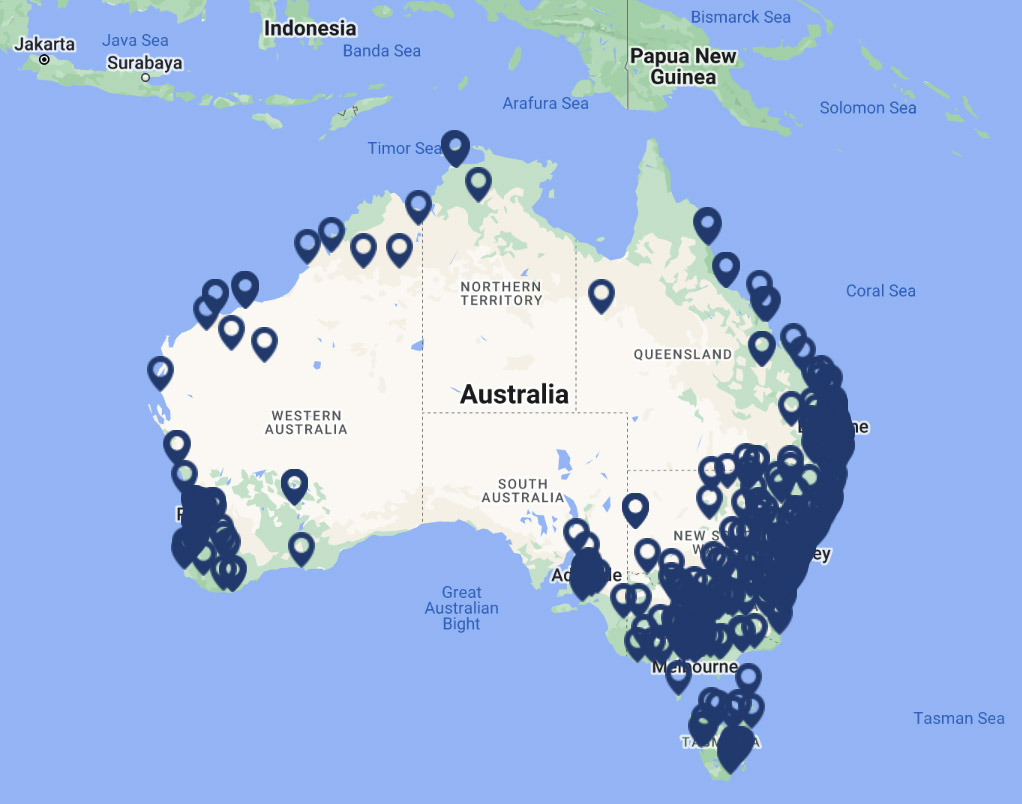
Our Vacancy Map and Browse Jobs pages will allow you to review the latest eligible jobs nationwide.

DXC Medical Vacancy Map   DXC Medical Browse Jobs

We look forward to arranging a video call with you to discuss your personal and professional requirements.


482 Visa: Everything You Need to Know Image

482 Visa: Everything You Need to Know

  • October 13, 2025

SIMGS: Fast-Track Your Move to Australia Why the 482 Visa Could Be Your Shortcut to PR If you’re a SIMG holding out for Australian PR before making the move Down Under, it’s time to rethink your strategy. It’s natural to hesitate when faced with the upfront cost of a 482 visa, especially for a family. But here’s the mindset shift that makes all the difference: this is not a cost, it’s an investment in your career, income, and future in Australia.
Recruiting and Onboarding International GPs: Everything you need to know Image

Recruiting and Onboarding International GPs: Everything you need to know

  • August 13, 2025

If you’ve ever tried to bring an overseas-trained GP into your practice, you’ll know the process is far from straightforward. Between eligibility checks, visa requirements, medical registration, and relocation logistics, even the most enthusiastic hiring process can quickly hit frustrating roadblocks.

Understanding Australia’s GP Colleges and Training Pathways Image

Understanding Australia’s GP Colleges and Training Pathways

  • November 13, 2025

Did you know that Australia is the only country in the world with two specialist colleges for General Practice? This unique structure means double the opportunities for both domestic and international doctors seeking a career in general practice.