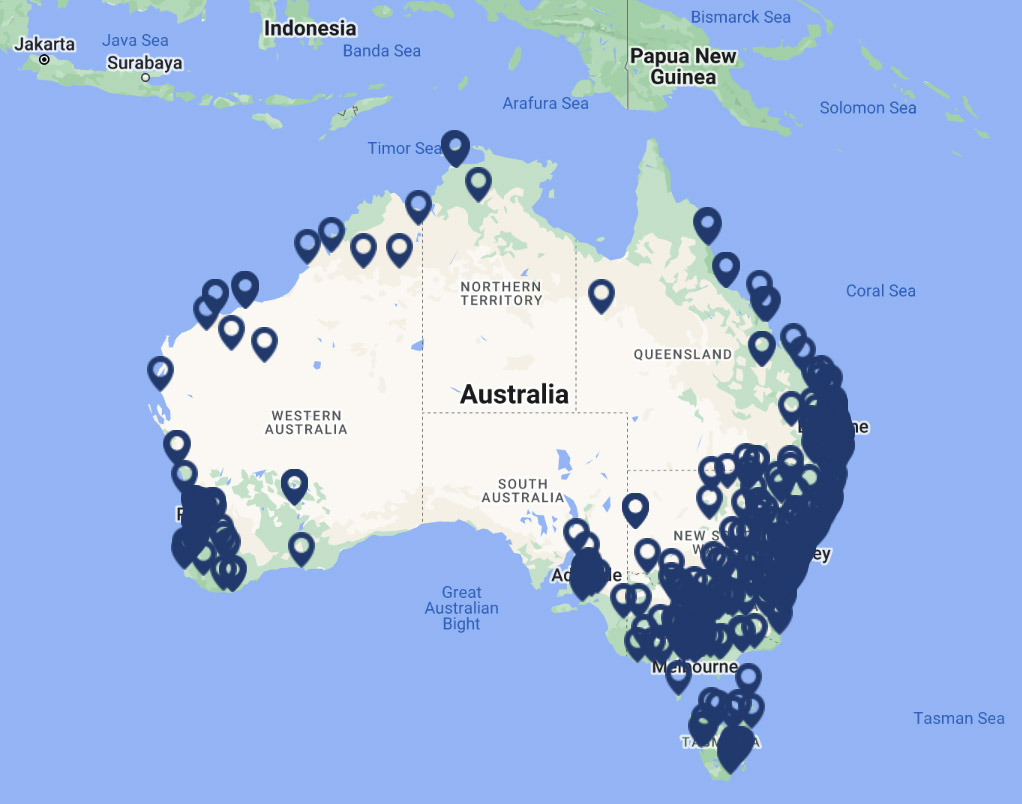
Workforce insight | GP recruitment | Section 19AB
For doctors and practices involved in GP recruitment, Distribution Priority Area (DPA) status can be much more than a classification on a map.
For some doctors, particularly those subject to Section 19AB restrictions under the Health Insurance Act 1973, the DPA status of a practice can be fundamental to their ability to access Medicare benefits. For practices, DPA status can significantly influence the pool of doctors they can recruit.
That is why the timing and uncertainty surrounding the next DPA update deserves attention.
The DPA update cycle: Why the timing matters
The Australian Government’s DPA system is designed to identify areas where communities have inadequate access to general practice services and to help direct the medical workforce towards areas of need.
DPA classifications are reviewed using workforce, Medicare billing, population, demographic and geographic information.
The most recent annual DPA update occurred in March 2025, with the updated DPA and Modified Monash Model classifications implemented in Services Australia’s systems from 13 April 2025. The Health Workforce Locator was subsequently refreshed in January 2026, but the Department continues to identify the March 2025 update as the most recent annual DPA update.
Many people working in GP recruitment have traditionally watched July as the period when an annual DPA change might occur. However, there is no guarantee that the annual update will occur in July. The history of DPA updates demonstrates that timing can vary.
With July 2026 having passed without a new annual DPA classification update, the question for practices and doctors is not simply, “When will the update happen?” The more important question is: “What should I be doing before it happens?”
At DXC Medical Recruitment, our view is that practices and doctors should treat the coming months as a period of uncertainty and preparation. We are not predicting a specific release date or suggesting that particular suburbs will definitely lose DPA status. We believe it is prudent to prepare for the possibility of a change before the next classification is published.
Why DPA status matters to doctors
Section 19AB of the Health Insurance Act 1973 places restrictions on access to Medicare benefits for certain overseas-trained doctors. Various exemptions may be available depending on the doctor’s circumstances.
For a doctor who depends on DPA status, the location of a prospective practice can be a critical part of their employment decision. This may affect:
- International Medical Graduates (IMGs)
- Overseas-trained GPs
- Doctors subject to Section 19AB restrictions
- Australian-trained doctors who remain subject to a moratorium
- Doctors considering moving between practices while still subject to applicable restrictions
The Department of Health recognises Prior Employment Negotiations as one of the available Section 19AB exemptions. This can be relevant where a doctor began negotiating employment with a practice while the location was DPA/DWS and the location subsequently becomes non-DPA/DWS. The requirements must be assessed against the doctor’s individual circumstances.
Prior Employment Negotiations: Why evidence matters
The Prior Employment Negotiations exemption should not be interpreted as a blanket guarantee. Signing an employment contract does not automatically mean that every doctor will receive an exemption or that the doctor is automatically protected for a fixed period. The individual circumstances and the requirements of the relevant exemption must be considered.
Government guidance highlights the importance of evidence demonstrating that employment negotiations began while the location was DPA/DWS. Relevant records may include:
- Emails negotiating a proposed start date
- Emails discussing delays to commencement
- Other correspondence relating to employment negotiations
- Copies of signed employment contracts
- Other documentation relevant to establishing when negotiations began
The practical recommendation is simple: document the position while it exists.
If a practice is currently DPA and is recruiting a doctor who relies on DPA status, do not assume that the current classification will always be visible in exactly the same form. The Health Workforce Locator is designed to show the current classification of a location. If the classification changes, the current result will change accordingly. Practices should therefore consider retaining dated evidence of the DPA status at the relevant point in the recruitment process.
A simple DPA evidence file
- The exact practice address: ensure it matches the location where the doctor will work.
- The Health Workforce Locator result: save a PDF, print a copy or take a dated screenshot showing the classification.
- The date the classification was checked: DPA is not a permanent designation.
- Employment negotiation correspondence: keep relevant emails and other records showing when discussions began.
- The employment agreement: retain the signed agreement with the recruitment documentation.
- Correspondence regarding commencement: keep records of delays, changes or negotiations around the start date.
This is a small administrative task compared with the potential difficulty of reconstructing the evidence later.
Why practices should pay particular attention
For practices, DPA status can be a significant recruitment advantage. A practice may be competing for doctors in a tight workforce market while also recruiting doctors who have restrictions on where they can access Medicare.
If a practice is currently DPA, the classification can make the practice accessible to a broader pool of doctors subject to Section 19AB restrictions. That is valuable, but it should not be treated as permanent.
The Government’s DPA methodology considers factors including GP workforce, GP service access, Medicare billing data, population demographics, population growth, GP infrastructure, geographic accessibility and GP catchment boundaries. Classifications can change when there has been a significant change in access to healthcare since the previous update.
Today’s workforce environment can produce a different classification tomorrow.
The MMM1 question
One area we are particularly interested in watching is the future of MMM1 DPA locations. The Modified Monash Model identifies MM1 as metropolitan Australia, and DPA uses MMM boundaries. Not every MM1 location can simply be treated as DPA.
Under the exceptional-circumstances framework, eligible MM1 outer-metropolitan locations may be considered for DPA review where exceptional circumstances affect access to GP services. MM1 inner-metropolitan locations are not eligible for this DPA review pathway.
The 2025 DPA update resulted in significant changes to a number of outer-metropolitan locations. For example, the Government’s March 2025 announcement identified the following among the WA locations receiving expanded DPA coverage:
- Armadale
- Byford
- Cockburn
- Gosnells
- Kalamunda
- Mundaring – Swan View
- Swan
- Wanneroo – Quinns Rocks
- Joondalup – Partial (North side only)
This demonstrates that metropolitan and outer-metropolitan classifications can change substantially when workforce and population data are reassessed.
Could some MMM1 locations lose DPA?
This is where it is important to distinguish fact from foresight. There is currently no official announcement stating that particular MMM1 locations will lose DPA at the next annual update. Nor have we identified an official announcement establishing that DPA was granted to particular locations specifically to support Medicare Urgent Care Clinics.
However, there is a broader workforce-policy conversation around GP distribution, international medical graduates, metropolitan GP shortages, Medicare workforce settings, urgent care services and population growth. Medicare Urgent Care Clinics have also expanded, including in metropolitan and outer-metropolitan areas.
It is reasonable for workforce planners and recruiters to ask whether the workforce environment surrounding some metropolitan DPA locations could look different when the next DPA assessment is undertaken. But that remains a question, not a prediction.
We should not tell doctors that a particular suburb will lose DPA unless and until the Government announces a change. If a doctor’s work decision depends on DPA, uncertainty itself is a reason to prepare.
What should doctors do?
If you are a doctor who requires a DPA location, our practical advice is not to unnecessarily delay a genuine employment decision while waiting for the next DPA update.
If you have found the right practice, completed negotiations, agreed on employment terms, confirmed the location’s current status and determined that the role suits your professional and personal circumstances, discuss the timing of the employment agreement with the practice.
If you are relying on a Section 19AB exemption, make sure you understand which exemption applies to your circumstances. Do not assume that a recruiter, practice or colleague can guarantee your Medicare eligibility. Section 19AB is an individual regulatory matter. Where there is uncertainty, seek confirmation from the appropriate Government authority or a qualified professional adviser.
What should practices do?
For practices currently recruiting doctors who depend on DPA, we recommend being proactive. Before the next DPA update:
- Check your current DPA status.
- Save dated evidence from the Health Workforce Locator.
- Keep recruitment correspondence.
- Document when employment negotiations began.
- Retain the signed employment agreement.
- Understand which doctors in your recruitment pipeline rely on DPA.
Do not leave DPA-dependent recruitment decisions until after an update. A practice may find itself in a different recruitment environment if its classification changes. A documented recruitment process provides greater clarity than trying to reconstruct events after the fact.
Our DPA foresight
At DXC Medical Recruitment, we do not claim to know what the next DPA update will contain. We do not have advance access to Government decisions, and we cannot say which locations will remain DPA or which may change.
But we believe we have a responsibility to recognise the risks that doctors and practices face and communicate them. Our role as recruiters is not simply to fill vacancies. We work with doctors navigating registration, Medicare restrictions, relocation and career decisions, and with practices dealing with workforce shortages, patient demand and the challenge of finding the right GP.
Recruitment should involve more than asking:
- Can we find a doctor?
- Can this doctor work here?
- What restrictions apply?
- What happens if the workforce classification changes?
- What evidence should we retain?
- Are we making this decision with all the relevant information?
These questions matter because recruitment decisions can have consequences long after the contract is signed.
The bottom line
The next DPA update may happen sooner than expected. It may happen later. Some locations may change; others may remain as they are. We simply do not know yet.
If you are a doctor whose career plans depend on working in a DPA location, waiting for certainty may not be the best strategy. If you are a practice recruiting DPA-dependent doctors, now is the time to document your current position.
Check the Health Workforce Locator. Save the evidence. Keep the correspondence. Document the negotiations. Understand the relevant Section 19AB requirements. If you have found the right doctor and are ready to proceed, do not unnecessarily delay the recruitment process simply because you are waiting to see when the next DPA update will occur.
Prepare before the change, rather than react after it.
At DXC Medical Recruitment, we believe good recruitment is about more than making a placement. It is about helping practices and doctors make informed, sustainable decisions.
Sometimes the most valuable recruitment advice is not “Here’s your next GP.” Sometimes it is “Here’s something you should know before you make your next decision.”
Important information
This article is provided for general information and workforce-planning purposes only. DPA classifications and Section 19AB requirements can depend on the individual doctor, practice location, timing and applicable exemptions. DPA status can change following Government classification updates or applicable review processes. Doctors and practices should verify current classifications through the Australian Government Health Workforce Locator and obtain appropriate advice regarding their individual circumstances.
Official resources