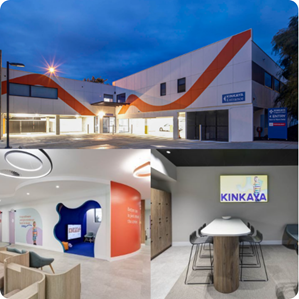
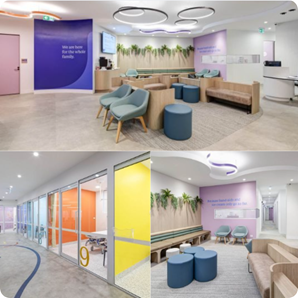
As urgent care clinics continue to play a growing role in Australia’s healthcare system, many doctors are curious about what working in this environment actually looks like day to day. In this edition of Inside Urgent Care, we speak with Liz Zerovich, Operations Manager at Kinkaya Health Urgent Care located in Inaloo, Western Australia, to explore how urgent care works in practice, the patients they serve, and why more clinicians are choosing this model of care.
About the Clinic and Community
Kinkaya Health Urgent Care provides timely, walk-in medical care for patients with urgent but non-life-threatening conditions. While the clinic has a strong paediatric focus, it also serves a diverse local community, supporting children, families, and adults who require care outside traditional general practice hours or who are unable to access same-day GP appointments.
“Our focus is on accessibility, efficiency, and high-quality clinical care,” Liz explains. “We aim to provide the right level of care at the right time, in an environment that feels welcoming and clinically robust.”
Common presentations include minor injuries such as fractures, sprains, lacerations, and soft-tissue injuries, alongside acute illnesses like infections, respiratory complaints, abdominal pain, skin conditions, and flare-ups of chronic disease. The clinic also manages wound care, minor procedures, and urgent diagnostic assessments, supported by on-site X-ray services and child-friendly pathology, allowing doctors to assess and treat patients efficiently in one location.
Where Urgent Care Fits in the Healthcare System
Urgent care sits squarely between general practice and the emergency department.
“Unlike general practice, we’re equipped to manage higher-acuity, same-day presentations with on-site diagnostics and procedures,” Liz says. “And unlike emergency departments, we focus on non-life-threatening conditions, which allows us to offer shorter wait times and a more streamlined patient experience.”
This positioning plays a critical role in supporting Australia’s broader healthcare system. By managing presentations that would otherwise end up in emergency departments, urgent care clinics help reduce hospital pressure and improve patient flow across the system.
Demand for urgent care has steadily increased in recent years, driven by difficulty accessing same-day GP appointments and ongoing strain on hospital EDs. As awareness of urgent care grows, more patients are choosing this model for timely, appropriate care.
Workforce and the Doctors Who Thrive in Urgent Care
Urgent care attracts doctors who are adaptable, clinically confident, and comfortable managing a wide range of presentations. Liz notes that GPs with procedural skills, doctors with emergency or hospital experience, and clinicians who enjoy fast-paced, patient-focused environments tend to thrive.
“At Kinkaya, experience or interest in paediatrics is particularly valuable,” she adds. “We also have several Rural Generalists working with us, and our founders both hold this qualification, which really shapes the clinic’s clinical culture.”
When recruiting, the clinic looks for strong clinical judgement, experience in acute care settings, procedural competence, and excellent communication skills. The ability to work efficiently, manage uncertainty, and collaborate closely with a multidisciplinary team is essential.
Like many healthcare services, workforce availability can be a challenge. Liz explains that retention is supported by prioritising work-life balance, maintaining a positive clinical culture, and offering supportive leadership within a brand-new, purpose-built facility.
Day-to-Day Life Inside the Clinic
No two days in urgent care are the same. Patient presentations can range from straightforward injuries to complex acute illnesses, requiring flexibility and teamwork.
“Our team works closely to assess, treat, and discharge patients efficiently, while maintaining a strong focus on safety and patient experience,” Liz says. The clinic also operates a dedicated fracture clinic two days per week, adding further variety to clinical work.
Patient flow and acuity are managed through structured triage processes led by an experienced nursing team, supported by clear communication and strong collaboration across the clinic. Efficient workflows, integrated clinical systems, and clear protocols help keep the clinic running smoothly, with continuous improvement guided by feedback and data.
Why Doctors Choose Urgent Care
From Liz’s perspective, doctors are drawn to urgent care for the variety, immediacy, and clinical engagement it offers.
“Doctors enjoy managing a wide range of presentations and seeing tangible outcomes within a single shift,” she explains. “Many also value the team-based environment and the ability to focus on acute care without the administrative burden of long-term patient management.”
Urgent care’s shift-based structure provides flexibility that appeals to doctors seeking improved work-life balance, while the breadth of presentations allows doctors to maintain and expand procedural and diagnostic skills.
Feedback from doctors working at Kinkaya frequently highlights the supportive culture, strong teamwork, purpose-built environment, and the expertise of the nursing staff.
Challenges and Realities of Urgent Care
One common misconception is that urgent care is simply “general practice with walk-ins” or a scaled-down emergency department.
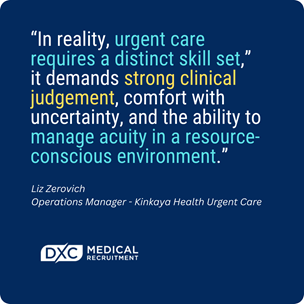
“In reality, urgent care requires a distinct skill set,” Liz says. “It demands strong clinical judgement, comfort with uncertainty, and the ability to manage acuity in a resource-conscious environment.”
Operational challenges include fluctuating patient demand, workforce sustainability, and maintaining consistent clinical quality. These are addressed through strong leadership, careful workforce planning, and ongoing evaluation of systems and processes.
Staff wellbeing is also a priority. Reasonable rostering, open communication, case debriefing, peer support, and access to senior clinical input are key strategies used to support teams in what can be a high-pressure setting.
Training, Governance, and Ongoing Development
Doctors new to urgent care receive structured onboarding, including orientation to clinic workflows and medical software. Mentoring is readily available, and clinicians are encouraged to ask questions and debrief cases as they build confidence in the urgent care environment.
Clinical governance is underpinned by evidence-based protocols, regular clinical review, clear scope-of-practice guidelines, and strong escalation pathways to ensure patient safety.
Kinkaya Health actively encourages ongoing learning, offering opportunities for doctors to refine procedural skills and expand their acute care expertise over time.
Looking Ahead: The Future of Urgent Care
Liz expects urgent care to play an increasingly important role in Australia’s healthcare system, particularly as access to general practice becomes more challenging and hospital demand continues to rise.
“Integration with primary care and hospitals will be key,” she says, alongside greater consistency in models of care and clearer referral pathways. Increased awareness among both patients and clinicians would further strengthen the sector nationally.
For doctors considering a move into urgent care, Liz’s advice is simple: be open to learning, seek out supportive clinics, and embrace the variety the role offers.
“Urgent care can be an incredibly rewarding environment for doctors who enjoy acute medicine, teamwork, and making a meaningful impact in a short timeframe.”
Interested in working in Urgent Care?
At DXC Medical, we work closely with urgent care clinics across Australia and support GPs exploring this space, whether you’re curious, actively looking, or simply want to understand your options.
Explore current urgent care GP opportunities or speak with our team to learn more.