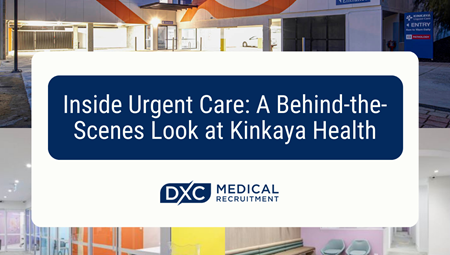
After more than 14 years working in traditional general practice, Dr Siva was looking for a way to reconnect with a side of medicine he had always enjoyed, acute and urgent care.
While continuity of care remains at the heart of general practice, Dr Siva found himself missing the hands-on, fast-paced clinical work that comes with managing urgent presentations. Urgent Care Centres (UCCs) offered an opportunity to bridge that gap, without stepping away from general practice entirely.
Why Urgent Care?
Dr Siva had previously worked in emergency departments overseas but hadn’t had the opportunity to do so in Australia. Over time, he began to feel that while general practice is deeply rewarding, it can limit exposure to acute care.
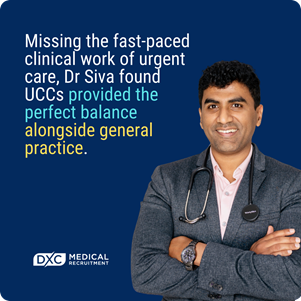
“General practice is all about continuity of care, but you do miss some of the acute and urgent presentations,” he explains. “Urgent care felt like a good fit, I could keep my regular GP work, but also practise skills I hadn’t used in a long time.”
For Dr Siva, urgent care wasn’t about replacing general practice. It was about complementing it.
Stepping Into Urgent Care
The move into urgent care came at the right time. After relocating to a new area and restructuring his existing GP commitments, Dr Siva discovered a newly opened Urgent Care Centre just five minutes from home.
Over the Christmas and New Year period, including public holidays like Christmas Eve and New Year’s Eve, he picked up several locum shifts.
“It was a brand-new site, and I was the only doctor on shift, but I had excellent nursing support,” he says. “It was busy, and I was seeing cases I hadn’t managed in years.”
From laceration repairs and bleeding management to caring for elderly patients who couldn’t reasonably attend the emergency department, the work was varied, practical, and clinically engaging.
“I loved it, professionally and personally. It worked financially, it was satisfying, and it gave me something different from my regular work.”
The Flexibility Factor
One of the biggest drawcards of urgent care for Dr Siva has been flexibility. Urgent Care Centres operate extended hours, including weekends and public holidays, times when emergency departments are often under pressure.
“I’m an early riser, and I don’t mind working weekends or public holidays,” he says. “If patients are coming to urgent care on those days, it’s usually for a genuine reason, they can’t wait six or ten hours in ED, or until the next day to see their GP.”
Looking ahead, Dr Siva plans to incorporate urgent care into his routine on a more regular basis, potentially working one or two days per week alongside his general practice commitments.
Supporting Work–Life Balance
With young children at home, balance remains a priority.
“You still have to work around family life. You don’t want to be too tired to be your best at work or at home,” he says. “Urgent care gives me options, early shifts, late shifts, or splitting the day.”
A Positive Role in the Health System
Dr Siva is clear in his view that Urgent Care Centres play a valuable role in Australia’s healthcare ecosystem.
“I know there was some initial negativity when UCCs were proposed, but I’m very pro urgent care,” he says. “They’re not replacing general practice, they’re supporting it.”
Patients seen in urgent care are discharged with clear documentation and encouraged to follow up with their regular GP. Continuity of care remains intact, while urgent care helps relieve pressure on emergency departments and improves access for patients who can’t afford or access care elsewhere.
“Every patient we see gets a discharge summary and is directed back to their GP. The mission is clear, there’s no ambiguity.”
Who Is Urgent Care Best Suited For?
According to Dr Siva, urgent care is a great fit for GPs who feel they’re not fully utilising their clinical skill set.
“If you’ve trained in Australia or overseas and have skills you’re not using, acute care, minor procedures, urgent care is ideal.”
Unlike many general practice settings, urgent care centres are fully equipped, with strong nursing support and systems designed specifically for acute presentations.
“In general practice, you might have the skills and the patients, but not always the equipment or staffing. In urgent care, everything is set up for that kind of work.”
The Admin Side of Things
Administrative burden is often a concern for doctors, but Dr Siva found urgent care workflows refreshingly streamlined.
“It felt quite efficient. Nurses triage, documentation is done properly, and once the consultation is finished, discharge summaries are sent on by admin staff.”
The end-to-end model, involving nurses, doctors, and administration, ensures accurate documentation, appropriate claiming, and smooth communication with patients and their regular GPs.
Looking Ahead
While Dr Siva hasn’t committed to a long-term contract just yet, urgent care is firmly on his radar.
“It’s definitely on the cards. The centre was happy with my work, and I’m keen to keep a mix of general practice and urgent care going forward.”
For GPs looking to diversify their clinical work, reconnect with acute care, or find greater flexibility in their schedules, urgent care may offer the best of both worlds.
Explore Urgent Care opportunities here.
Or contact the DXC Medical team to discuss your options.
Amy Sullivan
Senior Consultant
National Locum GP & Rural Generalist Division
+61 416 370 196
amy.sullivan@dxcmedical.com.au