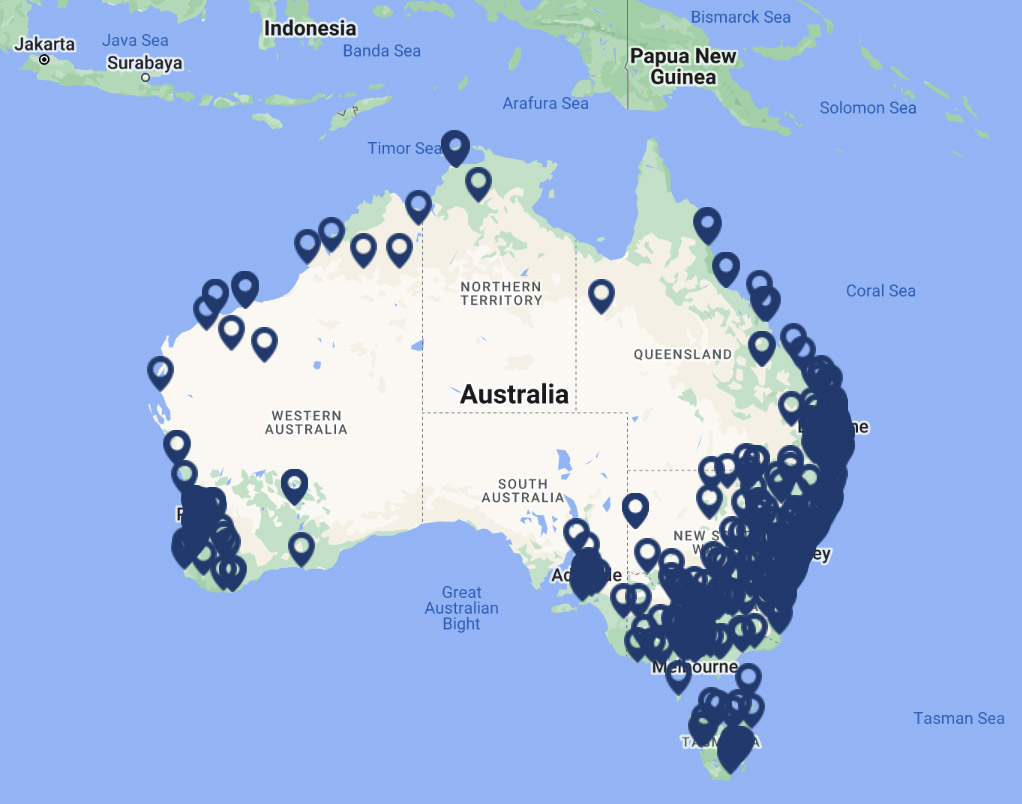
Understanding GP billings, practice service fees and Medicare incentives in Australian general practice.
One of the most common questions we hear from General Practitioners exploring new opportunities is:
"If a practice bulk bills its patients, how much of the Medicare payment actually goes to the GP, and how much does the practice keep?"
It's a great question, particularly with the changes to Medicare bulk billing incentives introduced in November 2025.
You may have seen GP job advertisements offering 65%, 70% or even 75% of billings. But what do these percentages actually mean? Does the arrangement change if the practice is fully bulk billing? And how do the additional Medicare incentives affect what a GP earns?
The answer is that there isn't one standard percentage across Australian general practice.
The amount a GP receives depends on their individual agreement with the practice, the billing model, the types of consultations provided and the Medicare incentives available.
Let's break it down.
First, What Does Bulk Billing Actually Mean?
Bulk billing is a payment arrangement under Australia's Medicare system where an eligible patient receives a medical service without paying an out-of-pocket consultation fee.
Rather than charging the patient directly, the GP accepts the applicable Medicare benefit as full payment for that service.
For example, when a GP provides an eligible consultation and bulk bills the patient, Medicare pays the relevant benefit for that consultation.
The patient pays nothing for that bulk billed service.
However, bulk billing determines how the medical service is paid for. It doesn't automatically determine how the payment is divided between the GP and the practice.
That division generally comes down to the GP's contractual or service agreement.
How Much of the Billings Does the GP Receive?
In many Australian general practices, GPs work as independent practitioners under a service agreement with the practice.
Under this arrangement, the GP typically receives an agreed percentage of their billings, while the practice charges a service fee for the facilities and support it provides.
Commonly advertised GP billing arrangements include:
-
65% of billings to the GP, with a 35% practice service fee.
-
70% of billings to the GP, with a 30% practice service fee.
-
75% of billings to the GP, with a 25% practice service fee.
These are examples of commercial arrangements, not Medicare-mandated percentages.
The exact split depends on factors including the location, practice operating costs, level of clinical support, patient demand and the individual agreement.
Example: A GP Receiving 70% of Billings
Let's say a GP generates $2,000 in gross Medicare billings during a working day.
Under a 70/30 arrangement:
| Description |
Amount |
| Total daily billings |
$2,000 |
| GP receives 70% |
$1,400 |
| Practice service fee 30% |
$600 |
If the GP works five days per week at the same billing level, their share would be approximately $7,000 per week before personal tax and any additional expenses.
Importantly, these figures are illustrative. Actual billings will vary depending on patient numbers, consultation types, appointment lengths, Medicare item numbers and the GP's working hours.
The GP's share of billings is not necessarily their final take-home income.
What Does the Practice Do With Its Percentage?
It's easy to assume that the percentage retained by the practice is simply profit.
However, operating a general practice involves significant ongoing costs.
The service fee generally contributes towards:
-
Reception and administrative staff.
-
Practice nursing support.
-
Consulting rooms and medical facilities.
-
Rent, utilities and property expenses.
-
Practice management software and IT systems.
-
Medical equipment and consumables.
-
Appointment bookings and patient management.
-
Cleaning, maintenance and general operating expenses.
-
Business management and operational support.
The facilities and services provided can vary considerably between practices.
For example, one practice might offer comprehensive nursing support, dedicated treatment rooms, experienced reception staff and a consistently full appointment book.
Another might provide fewer support services or require the GP to undertake more administrative tasks.
This is why a higher percentage of billings doesn't always translate into higher overall earnings.
A GP receiving 70% in a busy, well-supported practice may generate more income than a GP receiving 75% in a practice with lower patient demand.
Does the Percentage Change at a Fully Bulk Billing Practice?
Not necessarily.
A fully bulk billing practice can still offer a GP 65%, 70%, 75% or another agreed percentage of billings.
The difference is that the practice's consultation revenue comes primarily from Medicare benefits and applicable incentives rather than private patient fees.
For example, a GP working in a fully bulk billing practice on a 70% arrangement would generally receive 70% of the billings covered by their service agreement.
However, it is important to understand exactly which Medicare payments are included in that calculation.
This has become particularly relevant following the Australian Government's expanded bulk billing incentives.
What Changed to Medicare Bulk Billing in November 2025?
On 1 November 2025, the Australian Government introduced significant changes designed to encourage greater access to bulk billed general practice services.
There are two important components.
1. Expanded Medicare Bulk Billing Incentives
Previously, Medicare bulk billing incentive payments for eligible GP consultations were generally available when treating children under 16 and Commonwealth concession card holders.
From 1 November 2025, eligibility expanded to all Medicare-eligible patients receiving eligible GP services.
This means GPs can claim an additional Medicare bulk billing incentive for eligible consultations, regardless of whether the patient holds a concession card or is under 16.
The value of these incentives varies depending on the type of service and the practice's geographical location.
This is particularly relevant for regional, rural and remote practices, where some Medicare bulk billing incentives are higher.
These incentive items are separate from the standard Medicare consultation benefit.
An important consideration for GPs: The government's April 2026 BBPIP guidance confirms that Medicare bulk billing incentive item benefits are paid directly to the GP. GPs should nevertheless clarify how those items are treated under their practice service agreement, including whether any service fee applies.
2. The Bulk Billing Practice Incentive Program (BBPIP)
The Australian Government also introduced the Bulk Billing Practice Incentive Program, commonly referred to as BBPIP.
This is an additional incentive for eligible general practices that commit to bulk billing all eligible services for Medicare-eligible patients.
Under the program, participating practices and GPs can receive an additional incentive equivalent to 12.5% of the Medicare benefits earned from eligible bulk billed services.
Importantly, this incentive is paid on top of the standard Medicare benefits and applicable bulk billing incentive items.
And unlike the GP's normal percentage-of-billings arrangement, the BBPIP incentive has a prescribed distribution.
50% goes to the GP and 50% goes to the practice.
This 50/50 split applies specifically to the additional BBPIP payment, not to all Medicare consultation revenue.
How Does the 12.5% BBPIP Incentive Work in Practice?
Let's look at a simplified example.
Assume a GP working at an eligible BBPIP-registered practice generates $10,000 in Medicare benefits from services that qualify for the program.
The additional BBPIP incentive would be calculated as follows:
| Description |
Amount |
| Eligible Medicare benefits |
$10,000 |
| Additional BBPIP incentive (12.5%) |
$1,250 |
| GP receives 50% of BBPIP incentive |
$625 |
| Practice receives 50% of BBPIP incentive |
$625 |
The $1,250 is an additional payment, separate from the original $10,000 in eligible Medicare benefits.
If the GP's standard service agreement provides for 70% of the $10,000 in ordinary billings, the illustrative calculation would be:
| Description |
GP |
Practice |
| Standard Medicare billings (70/30) |
$7,000 |
$3,000 |
| Additional BBPIP payment (50/50) |
$625 |
$625 |
| Total |
$7,625 |
$3,625 |
This example assumes the standard service fee applies to the $10,000 base and that no additional contractual deductions apply to the GP's BBPIP payment.
It excludes separate Medicare bulk billing incentive items, other Medicare payments and any other practice income.
The example demonstrates why it is important to distinguish between the GP's agreed percentage of ordinary billings and the separate BBPIP incentive.
BBPIP payments are assessed quarterly and paid in arrears, rather than being added to each consultation payment.
Does Every Bulk Billing Practice Receive the Additional 12.5%?
No.
Participation in BBPIP is voluntary, and practices must satisfy specific eligibility requirements.
These include registering for the program, meeting MyMedicare requirements, advertising their participation appropriately and bulk billing all services covered by the program for Medicare-eligible patients.
Practices that bulk bill some patients but privately bill others may still be eligible to claim ordinary Medicare bulk billing incentive items for qualifying consultations.
However, they would not meet the fully bulk billing requirements for BBPIP if they privately billed services that the program requires them to bulk bill.
It is also worth noting that not every service a GP provides is necessarily included in the BBPIP calculation.
The additional 12.5% is calculated on eligible Medicare benefits, not automatically on every dollar of practice revenue.
For this reason, GPs should ask whether a prospective practice participates in BBPIP and how its incentive payments are managed.
Bulk Billing vs Mixed Billing: Which Offers Better GP Earnings?
This is another question we regularly hear from doctors considering a new GP position.
The answer depends on much more than the advertised percentage of billings.
Fully Bulk Billing Practices
In a fully bulk billing practice, patients are not charged an out-of-pocket fee for eligible bulk billed consultations.
Potential advantages for GPs can include:
-
Strong patient demand and accessibility.
-
A consistent flow of appointments.
-
Medicare bulk billing incentives for eligible consultations.
-
Additional BBPIP payments where the practice participates and meets eligibility requirements.
-
Less reliance on collecting private consultation fees from patients.
However, the total income generated still depends on patient numbers, the consultation mix and the Medicare benefits payable.
Mixed Billing Practices
In a mixed billing practice, some patients are bulk billed while others pay a private consultation fee.
For privately billed consultations, the practice sets its fees, and patients may receive a Medicare rebate for eligible services.
This can allow GPs to generate higher billings per consultation, depending on the fees charged and the services provided.
However, patient demand, appointment availability and the proportion of patients who are privately billed can all influence overall earnings.
An Illustrative Comparison
Consider two GP opportunities, each offering 70% of billings.
| Practice A |
Practice B |
| Billing model |
Fully bulk billing |
Mixed billing |
| Average daily gross billings |
$2,400 |
$2,800 |
| GP percentage |
70% |
70% |
| GP's daily share |
$1,680 |
$1,960 |
Based on ordinary billings alone, Practice B provides the higher daily share.
However, if Practice A participates in BBPIP, the GP may receive additional quarterly incentive payments.
Practice A might also offer greater patient demand, more comprehensive nursing support or other benefits.
Conversely, Practice B may offer longer consultations, a different patient mix or opportunities to develop particular clinical interests.
These figures are hypothetical and exclude separate incentive payments.
The key point is that the billing model and advertised percentage should never be considered in isolation.
Why Does Practice Location Matter?
The location of a general practice can influence Medicare incentive payments and the GP's overall earning potential.
Australia's Modified Monash Model (MMM) classifies locations according to geographical remoteness and town size, ranging from metropolitan areas (MMM1) through to very remote communities (MMM7).
Some Medicare bulk billing incentive items provide higher payments in eligible regional, rural and remote locations.
This means two GPs providing comparable consultations in different locations may receive different Medicare incentive amounts.
However, location is only one part of the financial picture.
Other considerations include:
-
The availability of GPs in the area.
-
Local patient demand.
-
Appointment capacity.
-
The practice's billing structure.
-
Additional rural workforce incentives, where applicable.
-
The types of clinical services the GP provides.
For doctors considering regional or rural opportunities, it is worth looking beyond the headline percentage and understanding the full remuneration structure.
What About International GPs Moving to Australia?
For international medical graduates (IMGs), Australia's GP remuneration model can be quite different from the salary arrangements they may be familiar with overseas.
In many Australian general practices, doctors are not paid a fixed salary.
Instead, they receive a percentage of the revenue generated through their consultations and other eligible clinical services.
This can make advertised figures such as "70% of billings" difficult to interpret without understanding Medicare, patient volumes and practice service fees.
International GPs should also be aware that their registration, Medicare eligibility, provider number arrangements and applicable workforce restrictions can influence where they can practise and which services they can bill.
For example, a GP working under a particular registration or supervision pathway may have different requirements from an established vocationally registered GP.
Before accepting an opportunity, it's important to understand not only the percentage offered but also the Medicare billing arrangements applicable to the individual doctor.
age of billings, whichever is higher, for an agreed period.
Understanding the terms of this guarantee can provide additional financial certainty when transitioning into a new role.
So, What Percentage Actually Goes to the GP and the Practice?
To summarise, there are three different payment arrangements to understand.
1. Standard GP billings
The GP receives the percentage agreed with the practice, commonly advertised as 65%, 70% or 75%, although other arrangements are possible.
The practice charges its agreed service fee to support operations.
2. Medicare bulk billing incentive items
These are additional Medicare payments for eligible bulk billed services.
The payments are distinct from ordinary consultation benefits and BBPIP payments. Their treatment under the practice service agreement should be clearly understood.
3. Bulk Billing Practice Incentive Program payments
Eligible participating practices receive an additional incentive calculated at 12.5% of eligible Medicare benefits.
This payment is divided equally between the GP and practice, with 50% paid to each.
Ultimately, there is no universal GP/practice percentage split simply because a clinic bulk bills.
The most important consideration is understanding how the complete remuneration arrangement works and what that means for your individual earning potential.
Looking Beyond the Percentage
At DXC Medical Recruitment, we understand that choosing the right GP opportunity involves much more than comparing advertised percentages.
A 75% offer might initially look more attractive than 70%, but it doesn't necessarily mean higher earnings or a better working environment.
Patient demand, billing structures, Medicare incentives, practice support, location and lifestyle all play an important role.
Whether you're looking for a fully bulk billing practice, a mixed billing environment or considering a move to regional Australia, understanding these details can help you make a more informed career decision.
Considering your next GP opportunity?
Our experienced GP recruitment consultants work with practices across metropolitan, regional and rural Australia and can help you explore opportunities that align with your professional goals, preferred working arrangements and earning expectations.
Get in touch with the DXC Medical Recruitment team to discuss what's available.
Disclaimer: This article provides general information about Australian general practice billing and Medicare incentives as at November 2026. Remuneration arrangements vary between practices and individual service agreements. Medicare eligibility, incentive requirements and program guidelines may change. GPs and practice owners should refer to current Services Australia and Department of Health, Disability and Ageing guidance and seek independent professional advice where appropriate.